

Sexual Wellness, Understanding Safety, Understanding Sex

Do Condoms Really Reduce Pleasure? Busting the Sensitivity Myth

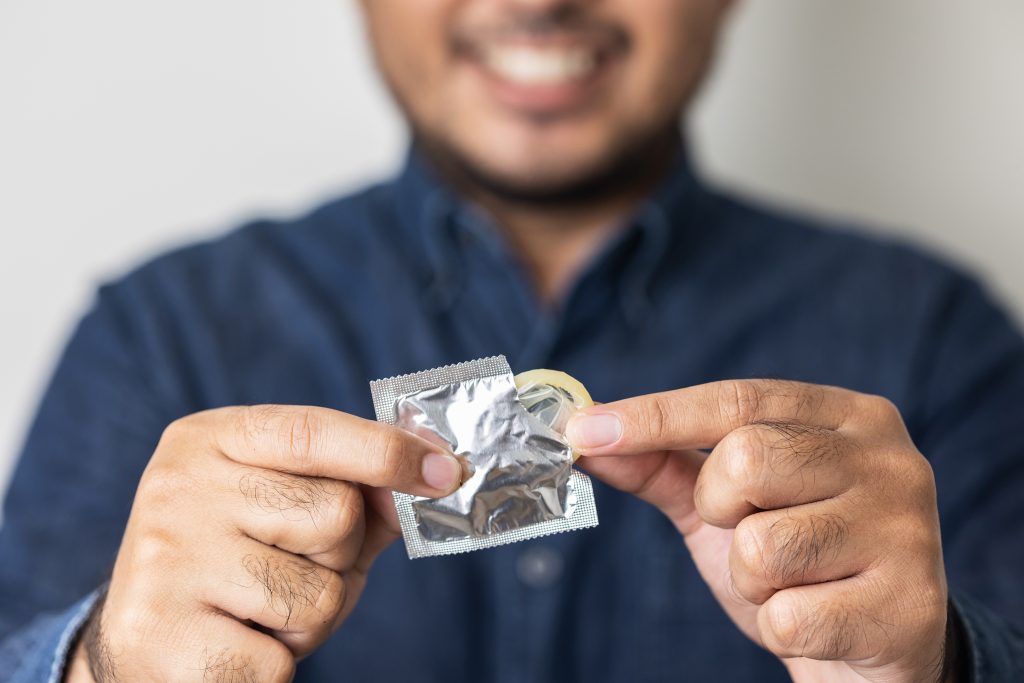
One of the most persistent myths surrounding men’s sexual health is that wearing protection acts like a wall against pleasure. For decades, the “condoms dull the feeling” argument has led many men to risk unprotected encounters or hesitate during intimate moments.

However, understanding how condoms work reveals that choosing protection no longer means sacrificing sensation.

Traditional condoms average around 0.07mm in thickness. While this barrier effectively prevents pregnancy and sexually transmitted infections (STIs), older latex formulations could dampen pleasure feedback and slow body heat transfer between partners.

Sensitivity during intimacy depends on two factors:

  1. Tactile Friction: Feeling subtle textures, contours, and physical shifts.
  2. Thermal Transfer: Sensing body warmth pass through the barrier.

When a condom isolates body heat, the brain perceives the interaction as less natural. This temperature insulation is what causes men to feel “nothing” during sex.

How  Ultra Thin Condoms Change the Game

Modern condoms focus on reducing barrier thickness while increasing durability. Even just 0.02mm change makes a noticeable difference. Thinner walls allow body heat to pass through almost instantly, providing a “skin-on-skin” sensation.

To experience true “barely there” comfort, switching to specialized micro-thin options makes a significant difference:

  • PREMIERE Condoms Ultra Thin: Made to be significantly thinner than standard latex condoms at 0.055mm only. Offering extreme sensitivity while retaining a comfortable, second-skin fit.
  • PREMIERE Condoms Air: Features a super thin profile at 0.045mm! Maximum skin-like contact for the best physical connection.

Condoms shouldn’t feel like a compromise. Upgrading to PREMIERE Condoms Ultra Thin and PREMIERE Condoms Air allows you to protect your health without sacrificing pleasure and intimacy.

Sources:

  1. National Library of Medicine. (2015). The effect of condoms on penile vibrotactile sensitivity thresholds in young, heterosexual men. https://pmc.ncbi.nlm.nih.gov/articles/PMC3947033/.
  2. The Royal Society Publishing. (2018). Friction-lowering capabilities and human subject preferences for a hydrophilic surface coating on latex substrates: implications for increasing condom usage. https://royalsocietypublishing.org/rsos/article/5/10/180291/93552/Friction-lowering-capabilities-and-human-subject.


Disclaimer for ai-Thea Usage on TRUST.ph

Welcome to TRUST.ph! Our ai-Thea is powered by Artificial Intelligence (AI) and is designed to provide general information on reproductive health. Please carefully read the following disclaimer before interacting with ai-Thea:

  1. Nature of Information
    ai-Thea provides general information and guidance on reproductive health based on your input. It does not replace professional medical advice, diagnosis, or treatment. For specific health concerns, always consult a licensed healthcare provider.
  2. Compliance with Philippine Laws
    • ai-Thea operates in compliance with the Data Privacy Act of 2012 (RA 10173), ensuring the security and confidentiality of personal data shared during interactions. We collect, process, and store your information responsibly and only for the intended purpose of assisting with your query.
    • Our services align with relevant provisions of the Revised Penal Code (RA 3815) and Responsible Parenthood and Reproductive Health Act of 2012 (RA 10354) to ensure lawful and ethical dissemination of reproductive health information.
  3. International Standards
    The ai-Thea also adheres to the Mexico City Principles of 2011, promoting the responsible and ethical promotion of health-related information and services.
  4. Data Collection and Use
    • Interaction with the ai-Thea may involve sharing personal data. By using the ai-Thea, you consent to the collection, processing, and storage of this data under the terms outlined in our Privacy Policy.
    • Any data shared is handled with the highest level of security and is not used for purposes beyond those specified, unless legally required.
  5. Limitations of Liability
    • While we strive to ensure the accuracy of information provided by the ai-Thea, we cannot guarantee its completeness or applicability to every situation.
    • trust.ph is not liable for any misunderstandings, misuse of information, or adverse outcomes resulting from ai-Thea interactions.
  6. User Responsibilities
    • You are responsible for ensuring that the information you share is not sensitive, unnecessary, or harmful.
    • Please refrain from sharing identifiable personal health information unless absolutely required.
  7. Amendments and Updates
    • This disclaimer may be updated periodically to reflect changes in legal requirements or service offerings. Please review it regularly.

For any concerns regarding data privacy or ai-Thea usage, please contact our Data Privacy Officer at (02) 5328-5020.

By interacting with this ai-Thea, you agree to the terms outlined in this disclaimer and our Privacy Policy.