
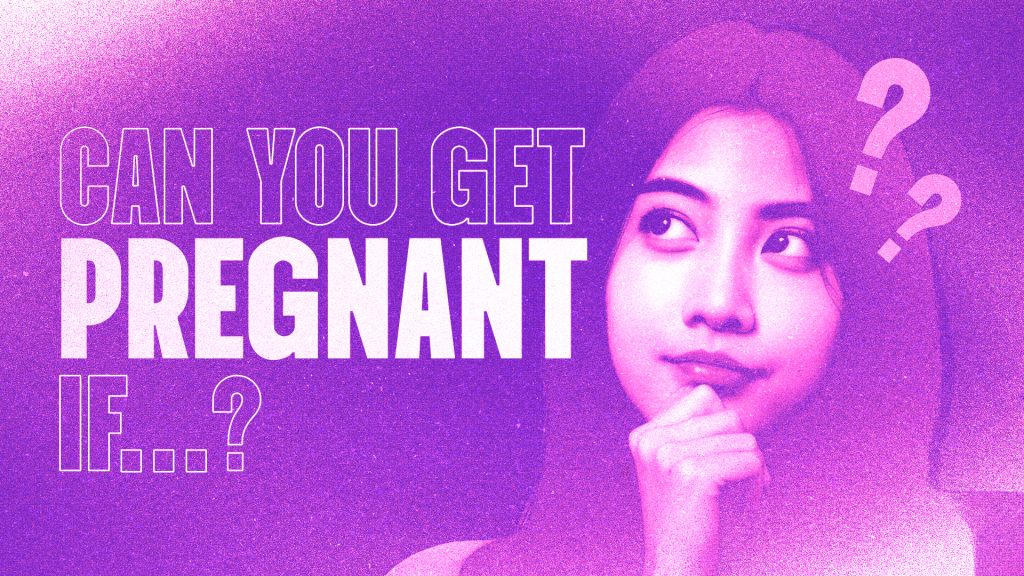

A lot of you may have questions about pregnancy myths—especially when it comes to what actually causes pregnancy and what doesn’t. Let’s clear things up in a simple, no-judgment way!
Understanding your body is part of safe sex, and knowing the facts helps you make better choices for yourself.
Can you get pregnant if there’s no penetration?

Yes, it’s possible—though the risk is lower. Pregnancy can still happen if sperm gets near the vaginal opening. That’s why using protection matters even before “full” sex happens.
Can you get pregnant the first time?

Yes. There’s no “safe first time.” If sperm meets an egg during ovulation, pregnancy can happen regardless of experience.
Can you get pregnant during your period?
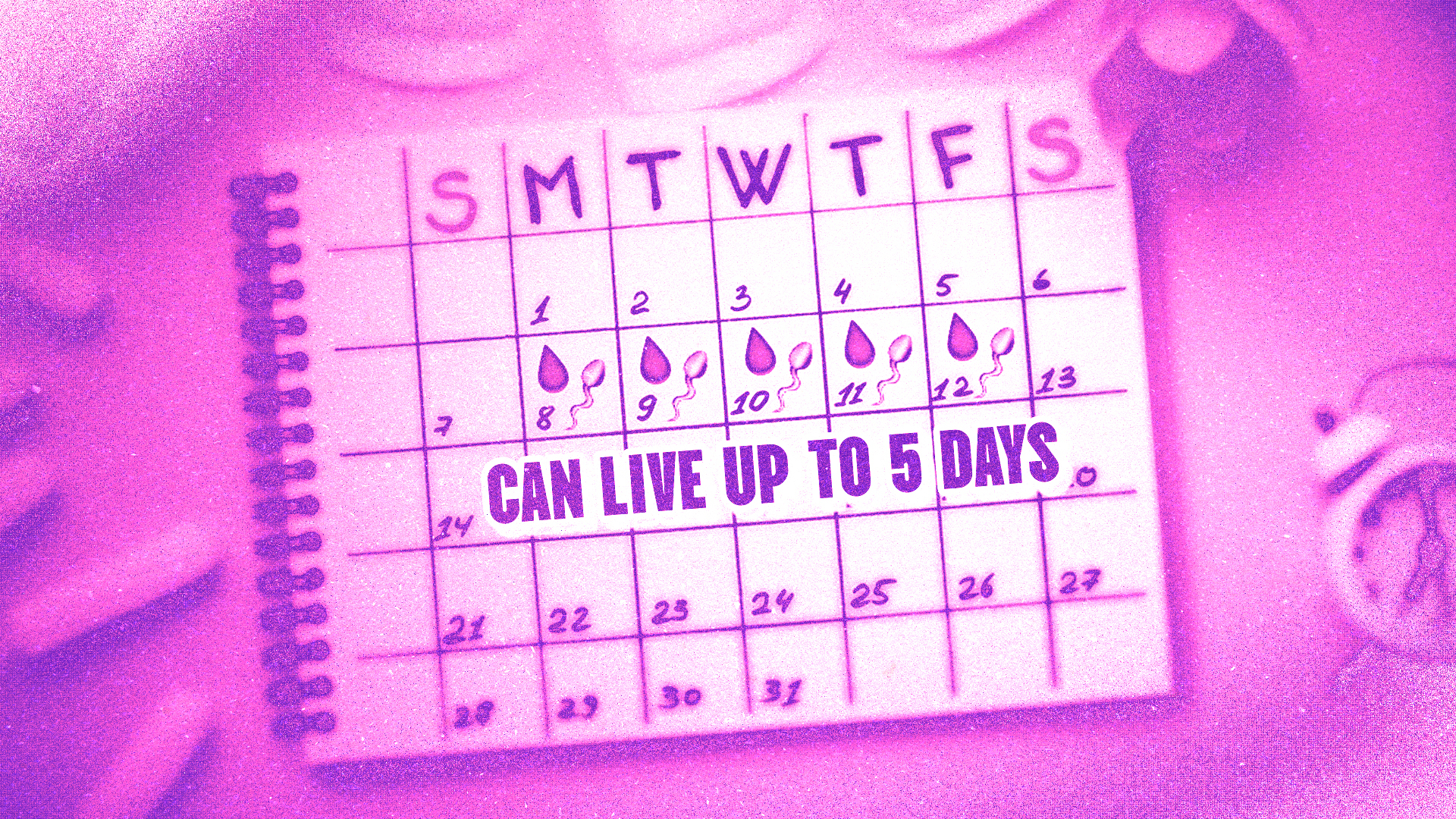
Yes, it’s still possible to get pregnant during your period or any time of the month. Sperm can live inside the body for several days, so timing isn’t always predictable. You can still get pregnant if your cycle is short and you ovulate soon after your period ends.
Can you get pregnant if he pulls out?
Yes. The “pull-out method” or withdrawal method is not a reliable form of protection. Pre-ejaculation can still contain sperm. You may also be at risk for STI transmission as long as the penis and vagina come into contact. Read the truth about the pull-out method here.
So, how do you protect yourself?
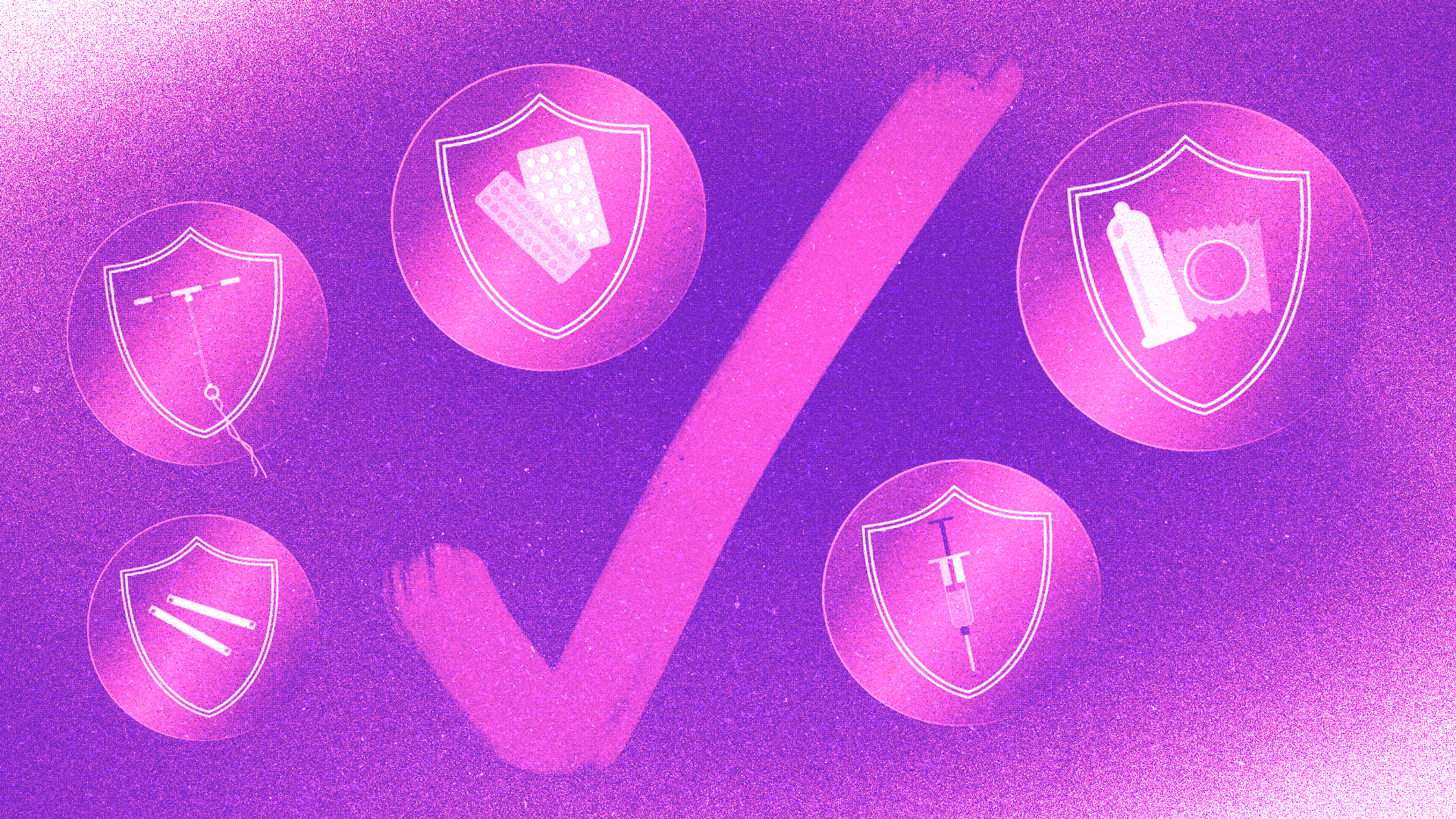
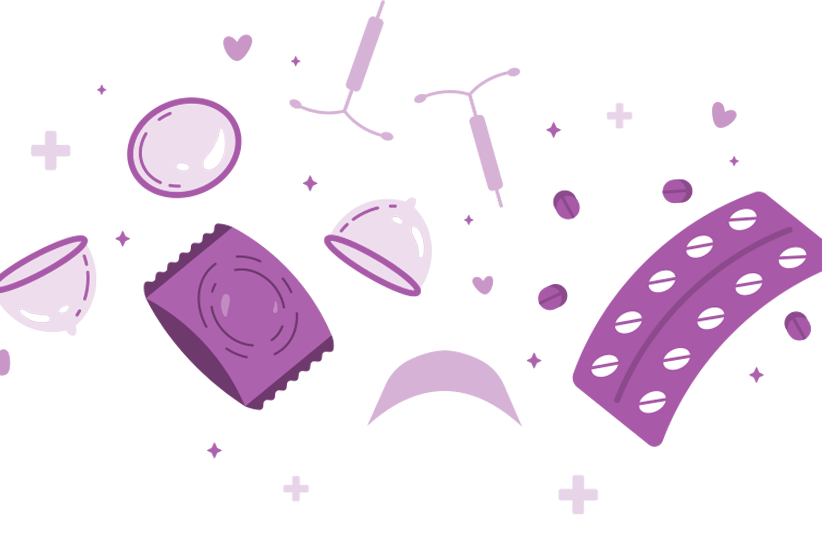
This is where family planning education becomes important. There are many birth control options in the Philippines teens and young adults can learn about early in life, including condoms, pills, and other long-acting reversible contraceptives.
But the most accessible and important protection for teens is always safe sex—which means understanding risks, setting boundaries, and using protection correctly and consistently. If you want to check out detailed methods on how to protect yourself, visit this.
The Bottom Line
Pregnancy myths can be confusing, but the truth is simple: if sperm meets an egg, pregnancy can happen.
Knowing the facts helps you stay informed, confident, and in control of your choices.
–
Reference
American Pregnancy Association. (n.d.). Pregnancy Myths Cleared Up. https://americanpregnancy.org/getting-pregnant/pregnancy-myths/